 EN
EN

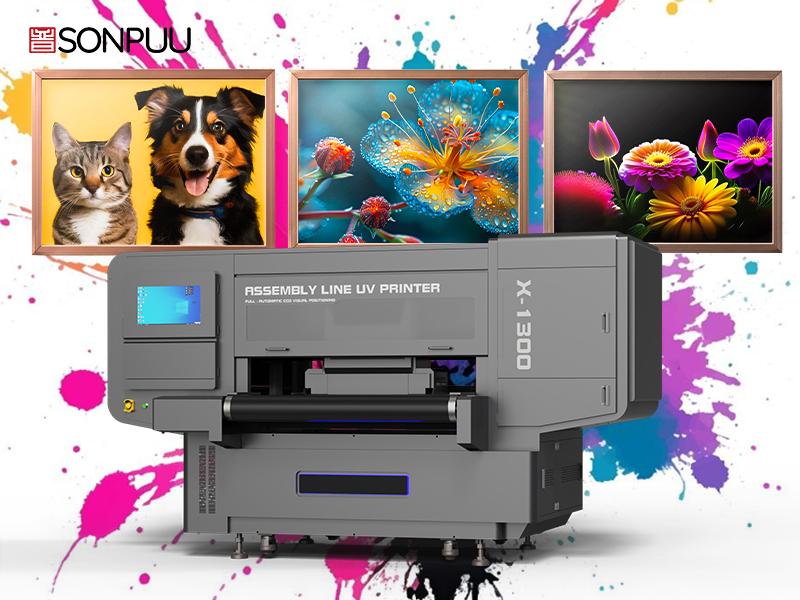
Dramatically Lower VOC Emissions with UV Printer Technology
How UV Curing Eliminates Solvent Evaporation and VOC Release
Old school solvent based printing works by letting the ink dry through evaporation, which releases tons of those bad guys called volatile organic compounds or VOCs for short. These VOCs are pretty much responsible for creating smog and can really mess with people's lungs. Now comes UV printing tech that changes everything completely. Instead of waiting for stuff to evaporate, UV printers use light to make magic happen right away. When ultraviolet light hits the ink, it starts a chemical reaction that turns liquid ink into strong polymer chains almost instantly. The whole process takes just seconds, doesn't need any heat, and works without needing special air flow conditions either. Because there's no evaporation happening anymore, the amount of VOCs floating around drops down to almost nothing these days, usually below 5 grams per square meter according to industry standards. Plus, there's way less wasted ink because there's no messy overspray issues, and workers don't have to deal with all those dangerous fumes hanging around the shop floor anymore.
Quantitative VOC Comparison: UV vs. Solvent Inks (EPA & ISO Data)
The numbers back it up too. Solvent based inks release around 120 to 150 grams per square meter of VOCs when they dry, which accounts for about 60 to 80 percent of their actual weight. Compare that to UV curable inks that only put out 0.1 to 5 grams per square meter. That's roughly a 97% drop in emissions according to recent studies from the U.S. EPA and ISO (2023). Such low levels basically eliminate concerns about volatile organic compounds, making it much easier for businesses to stay within those tough air quality regulations like the Clean Air Act over here or the EU's Industrial Emissions Directive across the pond.
| Emission Metric | Solvent Inks | UV-Curable Inks |
|---|---|---|
| Average VOC Content | 60–80% | <5% |
| Typical Emissions (g/m²) | 120–150 | 0.1–5 |
Based on EPA operational modeling, a mid-sized print facility switching to UV technology can prevent approximately 8 tons of VOC emissions annually—making it a foundational solution for sustainable, regulated print production.
Energy Efficiency and Reduced Carbon Footprint of UV Printers
Instant Cure vs. Thermal Drying: Energy Use per Square Meter
UV printing technology gets rid of those energy hungry thermal drying processes by curing ink with focused UV LED lights right at room temperature. This cuts down on energy consumption by as much as 84% for every square meter compared to traditional solvent based systems that need constant heat between 150 and 200 degrees Celsius just to get rid of all those solvents. Take a look at the numbers too. When making around 1,000 signage panels, solvent inks eat up about 3,200 kilowatt hours worth of power. That's roughly what an average home uses over three months straight! Meanwhile, UV printed versions barely scratch 520 kWh according to the PrintEnergy Report from last year. Makes quite a difference doesn't it?
Lifecycle CO₂e Savings in Commercial Signage Production
Over five years, UV printers reduce CO₂e emissions by 62% in commercial signage manufacturing. Key contributors include:
- No solvent exhaust systems, lowering HVAC energy demand
- Reduced substrate waste, as instant curing prevents ink bleeding and cuts material discard rates by 19%
- Streamlined logistics, with print-ready outputs eliminating secondary drying and reducing freight frequency
This translates to 8.7 tons of avoided CO₂e per printer annually—equal to sequestering emissions from 2,200 gallons of gasoline. These lifecycle advantages position UV curing as a critical enabler of carbon-neutral print operations.
Waste Reduction and Sustainable Material Use Enabled by UV Printers
Higher Ink Utilization and Minimal Overspray in UV Printing
UV printers achieve 80–95% ink deposition efficiency—nearly double the 40–60% typical of solvent systems—by instantly curing ink on contact and preventing airborne dispersion. Sustainable print audits show this precision reduces annual ink consumption by 30%, while eliminating the 15–25% material loss common in solvent-based drying.
Broad Substrate Compatibility Without Primers or Pretreatments
UV tech works on more than 200 different surfaces like recycled cardboard, bamboo and those old plastic items people throw away, all without needing any chemical primers first. Facilities can cut down on about 740 kilograms of toxic primer waste each year according to the US Environmental Protection Agency from 2023. Plus it means companies can actually use all those post consumer materials that would otherwise get tossed aside. Traditional solvent methods typically reject around 12 to 18 percent of materials during processing. The instant curing feature is another big plus too. It lets printers apply much thinner ink layers which saves materials. Tests show this cuts down on material consumption by roughly 19% for every square meter printed while still maintaining good opacity levels in the final product.
Operational and Regulatory Advantages Driving UV Printer Adoption
Switching to UV printers really speeds things up in production and makes dealing with regulations much easier. The instant curing process boosts throughput anywhere from 50 to 70 percent compared to traditional solvent systems. This means products can be processed right away after printing and shipped out faster. Labor costs drop significantly too, plus factories need about 30 percent less floor space overall. Another big plus is that these machines emit almost no VOCs at all. That automatically meets important environmental standards such as EPA Subpart OOOO and the EU's Industrial Emissions Directive. No more hassle with permits, storing solvents safely, or paying extra for disposing hazardous waste materials. On average, companies save around fifteen thousand dollars each year on compliance costs per printing station. Plus, since there's less risk of fire, insurance rates go down between twelve and eighteen percent. When combined with cleaner air inside the workspace, it's clear why more businesses are turning to UV technology for their printing needs now and going forward.
Frequently Asked Questions
What are VOCs and why are they harmful?
VOCs, or volatile organic compounds, are chemical pollutants typically released from solvent-based inks during drying. They contribute to smog formation and can have adverse health impacts, including respiratory issues.
How do UV printers reduce VOC emissions?
UV printers reduce VOC emissions by curing the ink using ultraviolet light, which eliminates the evaporation process and significantly lowers the release of VOCs, often below 5 grams per square meter.
Are UV printers energy efficient compared to traditional printers?
Yes, UV printers cure inks at room temperature using focused UV LED lights, reducing energy consumption by up to 84% per square meter compared to traditional thermal drying methods.
Can UV printing work on various substrates?
UV printing is compatible with over 200 different surfaces, including recycled and post-consumer materials, without requiring chemical primers or pretreatments.