 EN
EN

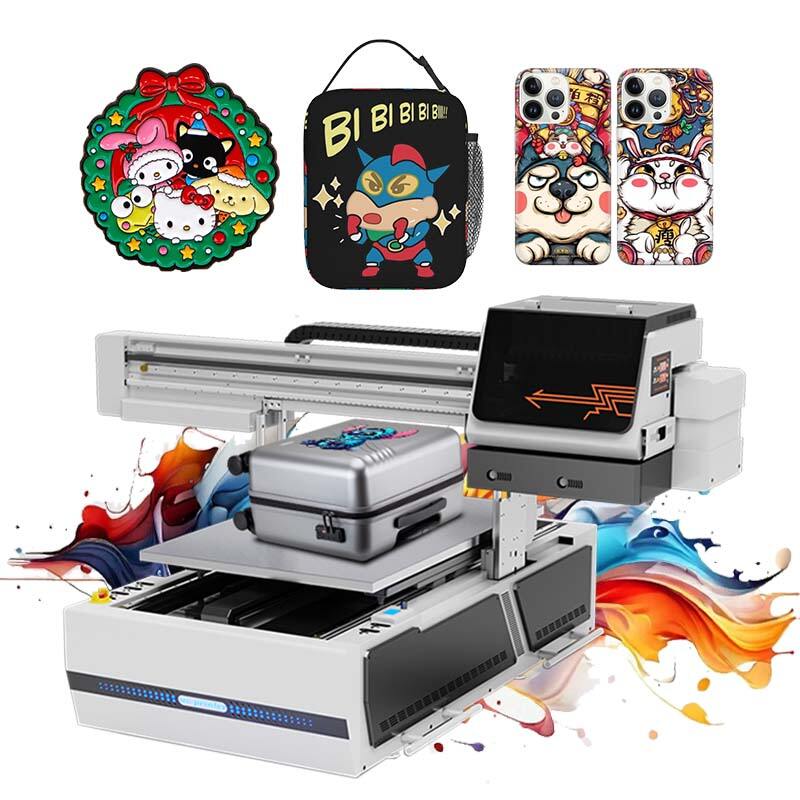
The UV Printer Color Stability Challenge: Why Fade Resistance Is Non-Negotiable
UV printers produce bright, eye-catching graphics for signs, product packaging, and various industrial needs. However, colors tend to fade too quickly which really cuts into their usefulness over time. Companies often end up spending extra money on replacements when prints start to look worn out. This also hurts brand reputation big time. Take outdoor billboards for instance they might lose around 40 percent of their original color strength after just one year if they don't have proper protection against fading. The problem gets worse outside where things like sunlight, rain, wind and temperature changes all work together to speed up deterioration way faster than what happens indoors.
- UV radiation breaks down molecular bonds in inks
- Temperature fluctuations cause substrate expansion and contraction
- Atmospheric pollutants trigger oxidative chemical reactions
Money matters when it comes to faded signs. Retailers spend around $740k every year just replacing old graphics according to research from the Ponemon Institute last year. But there's another angle too. A solid majority of shoppers link worn out visuals directly to lower perceived quality of products. When we talk about really important stuff like safety warnings on equipment, medicine containers, or those big brand logos at stores, bad colors aren't just an eyesore anymore. They can actually lead to problems with regulations being broken, operations going wrong, and customers losing faith in what they buy.
Fade resistance simply cannot be ignored when talking about print quality—it needs to be at the forefront of consideration rather than something tacked on later. When prints are subjected to intense sunlight conditions typical near the equator around 0.55 watts per square meter, special ink formulations become absolutely necessary. These inks contain complex structures like cross linked polymers along with built in UV blockers that stop the chemical breakdown caused by light exposure. The absence of such protective measures means that even expensive UV printing equipment won't maintain good results for very long. We've seen this happen repeatedly where businesses invest in top tier printers but still end up replacing prints far sooner than expected because they didn't account for proper fade protection from day one.
UV Ink Chemistry and Its Direct Impact on Long-Term Color Retention
Pigment Selection, Dispersion Stability, and Polymer Network Cross-Linking
The durability of UV printed materials starts with specially formulated pigments designed for this application. High quality UV inks contain tiny particles measuring less than 200 nanometers across. These particles are engineered to absorb light effectively, stay evenly distributed throughout the ink, and resist breaking down when exposed to sunlight. When pigments aren't properly mixed into the ink formulation, they tend to clump together over time. This creates areas where colors fade at different rates, leading to noticeable shifts in appearance. The UV curing process works through a chemical reaction called free radical polymerization, which creates strong bonds between molecules. This forms protective layers around the pigment particles, making them much less susceptible to oxygen damage that causes colors to fade. Studies have shown that prints with better cross-linking maintain their vibrant colors about 30 to 40 percent longer than those with weaker molecular structures. How well these pigments stick to the surrounding material matters too. Good chemical compatibility prevents small cracks from forming when prints experience heat changes or physical stress during normal use.
Acrylate Monomer Formulation and Its Role in UV Printer Ink Durability
The type of acrylate monomer used plays a big role in determining how well the final ink holds up against mechanical stress and environmental factors. When it comes to mono-functional acrylates, they generally give the material more flexibility. Di and tri-functional versions work differently though, creating stronger cross links between molecules. Getting the right mix is important because too much of one kind can lead to problems like brittle coatings on hard surfaces or cracks forming in flexible materials. Urethane based acrylates are particularly good at resisting breakdown from water exposure and preventing plasticizers from migrating out of the material. This makes them ideal for products that might encounter damp conditions or chemical solvents regularly. Some newer hydrophobic blends have been shown to cut down on water vapor passing through by around 60 percent, which protects colorants from getting damaged by excess moisture. Choosing the right monomers also affects how well the coating sticks to different surfaces while still maintaining its structural integrity even after going through multiple heating and cooling cycles.
Beyond UV Light: Environmental and Substrate Factors That Accelerate Fading
Substrate Compatibility, Coating Permeability, and Interfacial Degradation
What material we choose as a substrate makes all the difference when it comes to how long UV prints will last. Materials that don't absorb stuff, such as acrylic sheets or aluminum with protective coatings, tend to hold up much better against water getting in compared to regular wood or metal without any protection. But even good substrates need the right kind of coating on them. Sealants that keep things out stop both dampness and dirt from causing problems, though some coatings get too stiff and actually break apart when there are temperature changes over time. This breaks down the bond between layers. According to tests done across the industry, mismatched combinations of substrate and coating can cut print life short by about 40 percent in places where there's lots of moisture around. When the layers start coming apart because they weren't stuck together properly, bubbles form and parts lift away from surfaces, leaving the color underneath vulnerable to fading fast.
Temperature, Humidity, and Atmospheric Pollutants in Real-World UV Printer Deployments
Temperature fluctuations cause materials to expand and contract repeatedly, which creates tiny cracks over time. These cracks become gateways for moisture, ozone, and nitrogen oxides to get inside. When humidity stays above 60% relative humidity, the ink's polymer components start breaking down faster through hydrolysis. Meanwhile, city air pollution tends to eat away at red and yellow pigments much quicker than in cleaner environments. Research into how materials hold up shows that colors fade about 30 percent faster in urban areas versus countryside locations. The real problem comes when heat meets high humidity levels together. Prints exposed to this combination tend to degrade about twice as quickly as those affected only by sunlight. For anyone wanting their printed materials to last longer, adding protective coverings or finding shaded spots becomes pretty important.
Measuring and Specifying Color Stability for Reliable UV Printer Output
Measuring how colors hold up over time needs standard ways we can trust, especially when it comes to keeping UV printed materials looking good for longer periods. Most people in the business rely on two main approaches these days. First there's the Blue Wool Scale or BWS which compares how resistant different materials are to fading from light exposure. It rates fabrics from 1 to 8 where higher numbers mean better resistance against fading when exposed to UV light in controlled conditions. Then there's something called CIEDE2000 Delta E that measures how much colors actually change visually. Basically, if the Delta E number stays below 1.0, most folks won't notice any real difference with their eyes. These tools help manufacturers know what works best without having to guess all the time.
Blue Wool Scale vs. CIEDE2000: Practical Metrics for UV Printer Buyers
When working on important projects like brand identity work, product packaging design, or anything involving regulatory labels, always go with CIEDE2000 standards first. The color difference metric known as Delta E needs to stay below 1.5 after accelerated aging tests to meet commercial quality expectations. While BWS ratings still have their place for quick checks (a score between 7 and 8 usually means around 500 hours of UV protection), most professionals consider CIEDE2000 measurements as the real deal when it comes to verifying colors technically. According to research published in the Journal of Coatings Technology and Research, premium UV printed materials can maintain Delta E values under 1.2 even after simulating two years outdoors – which is roughly three times better than traditional solvent based printing methods when it comes to resisting fading over time.
FAQ
Why is fade resistance important for UV printing?
Fade resistance is crucial for maintaining the quality and longevity of printed materials. Without proper protection, prints can quickly degrade when exposed to sunlight, moisture, and environmental pollutants, leading to increased replacement costs and potential damage to brand reputation.
How do special ink formulations help in fade resistance?
Special ink formulations include cross-linked polymers and UV blockers that protect against chemical breakdown caused by light exposure. These formulations help ensure prints maintain their vibrant colors for longer periods, even in harsh outdoor conditions.
What role does the substrate play in UV print longevity?
The substrate material can significantly affect the durability of UV prints. More resistant materials, like acrylic sheets or aluminum, help prevent water ingress and degradation. The right substrate combined with protective coatings can extend print life considerably.
How do temperature and humidity affect UV prints?
High temperatures and humidity levels can cause materials to expand and contract, leading to tiny cracks. These allow atmospheric pollutants and moisture to penetrate, accelerating the fading process. Managing environmental factors is key to preserving print quality.