 EN
EN

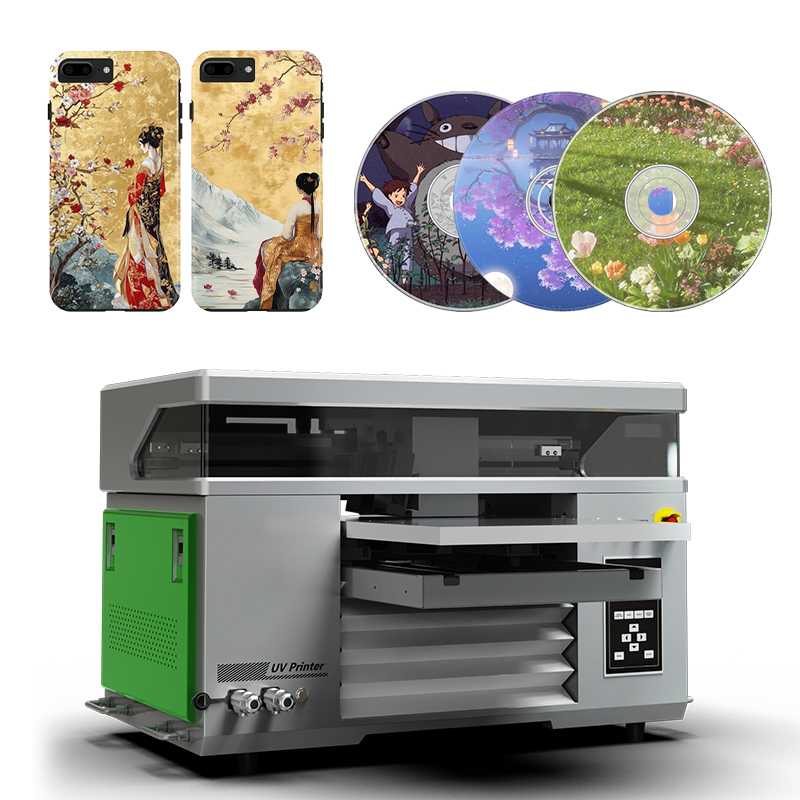
Why Color Accuracy Matters for UV Flatbed Printer Output on Phone Cases
The Challenge of Vibrant Neon and Saturated Colors on Glossy/Textured Phone Case Surfaces
Getting those bright neon green shades or rich blues right on phone cases is actually pretty tricky business involving some complex surface physics stuff. The problem starts with glossy surfaces that reflect light all over the place, and then there are these textured materials that just scatter ink droplets everywhere they shouldn't go. Both situations lead to this thing called metamerism where colors look completely different depending on what kind of lighting they're in. We've noticed that opacity drops around 30% when printing on rough surfaces versus smooth ones. For really vibrant colors, printers need to apply lots of ink but not so much that it breaks down over time. Too many layers and the whole thing cracks after curing. And don't even get me started on neon pigments. These bad boys tend to lose about 15 to maybe 22% of their brightness when printed along curved edges because the printer gets confused about how far apart to space those tiny ink droplets.
How UV Flatbed Printer Capabilities Influence Gamut, Opacity, and Layered Color Fidelity
Modern UV flatbed printers expand color gamut by 40% versus solvent-based systems, thanks to advanced piezoelectric printheads that precisely control 6–12 picoliter droplets—critical for maintaining vibrancy on complex geometries. Key performance advantages include:
- Gamut optimization: Wide-format UV models achieve 95% of Pantone® Neon Blue’s chromaticity using specialized ink formulations
- Opacity control: White underlayment layers increase color density by 2.7× on transparent cases
-
Curing precision: Instant LED curing minimizes ink bleed, preserving sharpness between layered colors
Calibrated systems sustain <2 ΔE*00 color deviation across 10,000 prints—ensuring brand consistency in high-volume production.
Optimizing Color Models and Rendering Intents for UV Flatbed Printing
RGB Workflow Best Practices: Why sRGB and Adobe RGB Outperform CMYK for UV Flatbed Printers
When it comes to printing vibrant colors on phone cases, UV flatbed printers really shine when using RGB workflows instead of the old school CMYK method. The subtractive nature of CMYK just can't match what additive RGB offers. RGB works better with how UV curing happens and keeps those bright, intense colors intact for things like neon and fluorescent inks. Some recent tests from 2023 show that RGB actually holds onto about 15 to 20 percent more color range for those striking electric blues and eye-catching neon greens. Plus there's no need for all those complicated color space conversions that mess things up. Gradients look smoother without banding issues, and colors stay consistent even on rougher surfaces. Most major printer makers agree that their RGB based UV systems create around 30% more vivid prints compared to regular CMYK versions when printed on the same glossy materials.
Selecting the Right Rendering Intent (Perceptual vs. Relative Colorimetric) for Vibrant Output
The rendering intent we choose really affects how vibrant colors appear on actual phone cases. The perceptual method basically squishes the entire color range down evenly, which works great for photos where those gentle transitions between shades matter so much. Then there's relative colorimetric, which keeps any colors within our printing capabilities exactly as they are, but cuts off anything outside that range to find the closest possible match instead. This makes it particularly good for bright neon designs and company logos that need to pop. According to some tests done last year on different materials, relative colorimetric actually boosts how intense colors look by around 12 percent compared to perceptual when dealing with super saturated colors. Before sending anything into mass production though, it pays to check everything carefully using soft proofing against what the specific printer can actually produce based on its ICC profile settings.
Building a Reliable Color Management Workflow for Phone Case Production
Calibrating Monitors and Creating Device-Specific ICC Profiles for Consistent Soft-Proofing
Getting accurate soft proofs starts with properly calibrating monitors using hardware colorimeters that keep color differences below ΔE 2, which is basically the smallest change most people can notice in colors. This creates a reliable reference point that matches what will actually be printed. Then comes creating those special ICC profiles for each device by running test prints through a spectrophotometer. What these profiles do is capture exactly how colors behave when printed on specific combinations of paper, ink, and printers, taking into account things like surface texture, finish levels, and even how UV light affects cured inks. Regular monthly checks help maintain consistent colors over time. Without this kind of maintenance, many shops end up dealing with around 27% rework because colors just don't match from screen to print, causing delays and extra costs in production runs.
Integrating UV Flatbed Printer ICC Profiles into Design Software
Embedding printer ICC profiles into design applications and RIP software automates accurate color translation across the workflow. Assign profiles at file setup to convert RGB or CMYK values into your printer's actual color space. Essential configuration steps include:
- Enabling color-managed workflows in design software
- Preserving embedded profiles during file import
- Selecting Relative Colorimetric rendering for solid neon graphics (not Perceptual, as previously misstated)
- Configuring RIP to prioritize device-link profiles for maximum fidelity
This integrated approach ensures Pantone 806 neon pink approved on-screen appears identically on glossy phone cases—eliminating subjective judgment and reducing material waste by up to 19% through first-pass accuracy.
FAQ
What causes metamerism in UV flatbed printing on phone cases? Metamerism occurs due to the different way surfaces reflect and scatter light, causing colors to appear differently under various lighting conditions.
Why is RGB better than CMYK for UV flatbed printers? RGB is better because it offers a wider color range and works more effectively with UV curing processes, especially for vibrant and neon colors.
What is the best rendering intent for printing vibrant colors? Relative colorimetric rendering is ideal for vibrant colors as it maintains colors within a printer's capabilities while finding optimal matches for others.